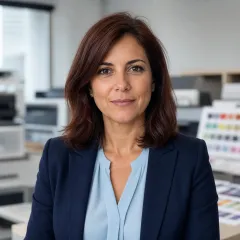
Confession: I've bought the wrong printer. Twice. Actually, three times if you count the one I bought for my home office that I never used. But the two that count cost me close to $2,000 in wasted equipment and downtime. I'm not a printer expert—I run operations for a supply chain company. Six years of managing label printing, though, has taught me more than I ever wanted to know. This guide is my attempt to save you the same mistakes.
There is no single "best" Zebra printer. The right one depends on how you're using it. In my experience, people fall into one of three situations:
- You need a few dozen labels a day—shipping labels, product labels, that kind of thing.
- You're cranking out hundreds or thousands of labels a day in a warehouse or production floor.
- You're not actually sure you need a label printer at all. Maybe a regular document printer or even a 3D printer is what you're looking for.
Scenario 1: Light-Duty Label Printing (Under 100 Labels/Day)
If your daily output is under 100 labels, a desktop printer like the Zebra ZP450 is more than enough. Honestly, it's perfect for a small office, a shipping desk, or a retail counter. I made the mistake of over-buying an industrial printer for this volume—it took forever to reach printing temp and used a ton of power. That was my first $900 mistake.
The ZP450 itself is solid. The pain point is the driver installation. I lost an entire afternoon to what I thought was a faulty printer but was actually a bad driver download. If you're hunting for the zebra zp 450 printer driver, go directly to Zebra's website. Do not use a third-party "driver updater" that promises to find everything. That's how I ended up with a corrupted driver and a printer that showed up as "USB Printing Support" in Windows. Reinstalling from the official source took ten minutes.
Another rookie mistake: setting up custom label sizes without double-checking the math. I had to create a label for a client with a tiny margin offset. The design software kept rounding the gap differently than the printer driver expected, so the labels shifted 1mm on every single print. I actually pulled out a rounding calculator—yeah, yes, a rounding calculator—to sort out the exact numbers. It saved me from wasting 2,000 labels. If you're doing custom sizes, do the math on paper before you ever load the roll.
Scenario 2: High-Volume or Harsh Environments
If you're printing hundreds of labels a day, or if the printer will live in a dusty warehouse, don't even look at desktop models. I started our shipping line with a desktop unit because I thought "it's just a label printer, how different can they be?" It jammed three times a week. The printhead wore out in four months. The downtime was brutal.
We switched to the zebra label printer zt231—and the difference was night and day. The ZT231 is built for continuous operation. It has a metal frame, a much longer printhead life, and it's designed to handle the kind of volume that would melt a desktop unit. After the change, label jams went from about 15 a week to zero in the first month. I have the maintenance logs to back that up.
One thing I didn't appreciate until we got the ZT231 is print resolution. At 300 DPI, the ZT231 produces barcodes that scan consistently. The industry standard for high-density barcoding is 300 DPI, and when you drop below that, scanners start to fail. That's not a fun conversation with a customer whose package has an unreadable label. Trust me.
Also, if you're printing shipping labels, remember that USPS has specific size rules. According to USPS (usps.com), for First-Class Mail letters, the maximum size is 6.125 × 11.5 inches. For large envelopes, you can go up to 12 × 15 inches. If your label stock is outside those dimensions, your mail pieces could get rejected. Don't learn that one the hard way.
Scenario 3: When a Zebra Isn't the Answer
Here's a conversation I've had too many times: someone asks me for a Zebra printer recommendation, and it turns out they need a regular office printer. If that's you, pause. A Zebra label printer is a specific tool for a specific job. For standard documents, the laser vs inkjet printer debate is more relevant. Laser printers are better for high-volume text and lower cost per page. Inkjet printers are better if you need color photos or graphics. We keep an inkjet for occasional color proofs, and a laser for the bulk of our admin printing. Each has its place.
And then there's 3D printing. I'll be the first to admit I'm not a 3D printing expert. But if your goal is rapid prototyping or printing custom parts, a label printer is the wrong tool entirely. A Bambu 3D printer is one of the popular choices these days, but I can't speak to the details. That's outside my lane. Talk to someone who actually runs one before you buy.
How to Tell Which Scenario You're In
You don't need to be a procurement expert to figure this out. Here's the 5-minute test:
- Count how many labels you actually printed last week. If it's under 500, you're in the light-duty camp. A ZP450 is plenty.
- If you're over 2,000 labels a week—or you print in long continuous runs—go industrial. The ZT231 or equivalent is the right class.
- If you printed zero labels last week because you haven't started yet, ask yourself: do you actually need labels at all? If not, go back to the laser vs inkjet decision or explore 3D printing.
Don't just look at the sticker price. A cheap desktop printer that jams every other day is more expensive than a robust industrial one that runs all year. That's what efficiency is about—not just speed, but uptime. The right printer should handle your workflow without babysitting. That's the goal.
I've made my share of mistakes so you don't have to. If you're standing where I was back in 2019, you now know the three paths. Pick the one that matches your actual volume and environment, download the correct driver, verify your label dimensions, and you'll be ahead of where I was.
And seriously, if a reseller asks you about your daily volume before quoting a price, that's a good sign. If they just try to sell you the most expensive unit, keep looking.
Hope this saves you the $2,000 I wasted. You're welcome.